
As global businesses expand cloud services, factories, hospitals, and communication networks, dependable power becomes a daily operating requirement. A UPS System protects sensitive equipment from outages, voltage drops, frequency changes, and unstable utility supply. Its value appears in quiet moments, such as a server room remaining online during a storm.
This guide examines the 2026 top UPS system suppliers for global buyers. It considers product reliability, battery options, efficiency, scalability, service coverage, monitoring software, and documented field experience. Large brands may offer broad support, but regional specialists can respond faster in certain markets. The cheapest quotation may also conceal replacement costs, limited spare parts, or weak commissioning support.
Jean-Pascal Tricoire, former Schneider Electric CEO, said, “There is no digital transformation without energy transformation.” His statement reflects the growing role of UPS technology in modern infrastructure. A UPS System now supports more than emergency backup. It helps stabilize operations, protect business data, and manage increasingly intelligent facilities.
Still, supplier rankings are not absolute. Buyer priorities differ. A hospital may require strict redundancy and rapid maintenance, while a small factory may prefer simple installation and lower ownership costs. Climate, grid quality, battery regulations, and local technician availability also matter. These details are easy to overlook.
The following overview offers a practical starting point for comparison. It does not replace site surveys, load testing, or independent technical verification. Global buyers should question every specification, including efficiency claims and expected battery life. Real performance can be less impressive than the brochure.
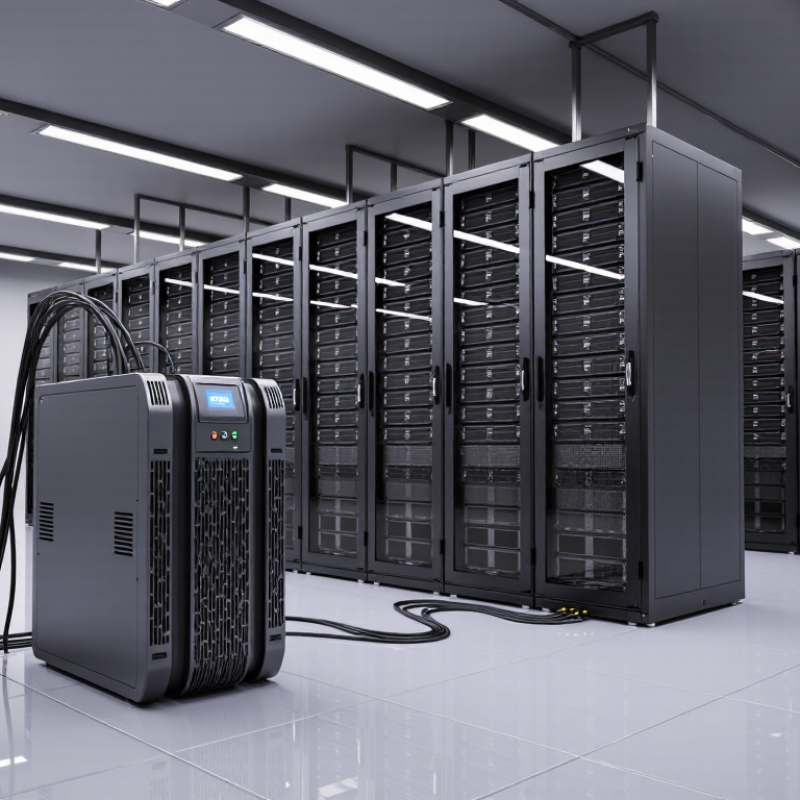
An uninterruptible power supply, or UPS, protects electrical equipment when utility power fails or fluctuates. It uses a rectifier, battery system, inverter, and bypass path to keep connected loads operating. During a blackout, stored energy reaches servers, medical equipment, control systems, or production tools within milliseconds. That brief bridge can prevent corrupted data, damaged components, and unsafe shutdowns.
Global buyers need more than a stated capacity rating. A 100 kVA UPS may perform differently under uneven loads, high temperatures, or poor power quality. Buyers should check voltage, frequency, phase configuration, battery runtime, overload performance, and short-circuit protection. Local service matters too. A remote site may wait weeks for replacement batteries or trained technicians. That delay can cost more than the original equipment.
In practical commissioning work, runtime calculations often look precise but depend on battery age, temperature, load growth, and maintenance quality. A neat spreadsheet can still mislead. Buyers should request tested performance data and clear installation requirements. They should also confirm local electrical standards, import rules, warranty coverage, and disposal procedures for batteries. UPS systems are not generators. They provide limited backup time, allowing an orderly shutdown or a transition to another power source. Good selection begins with the actual load, not the largest number in a supplier’s brochure.
A UPS system protects sensitive equipment by managing power between the utility supply and the load. Its topology determines how quickly and precisely it responds to disturbances. Standby units transfer to battery during an outage, but switching time may affect highly sensitive equipment. Line-interactive models regulate voltage through an automatic transformer and use the battery less often. Double-conversion systems continuously convert AC to DC and back to AC. They provide stable output, though their conversion losses create additional heat.
Core components include a rectifier, battery bank, inverter, static bypass switch, cooling system, and monitoring controls. The rectifier charges the batteries and supplies the DC link. The inverter then creates controlled AC output. During maintenance or overload, the bypass path can keep equipment energized. That path is useful. It is not a complete safety guarantee.
Professional buyers should compare efficiency at realistic loads, not only at the published peak rating. A 500 kVA UPS operating at 15% load may perform differently from the same unit at 75%. Check output power factor, harmonic distortion, voltage regulation, transfer time, overload duration, and battery recharge speed. Lithium and valve-regulated lead-acid batteries also require different thermal and maintenance planning. In a 40°C electrical room, battery life can decline quickly. Field assessments should include cable routes, airflow, generator compatibility, and fault-current behavior. A clean specification can still hide installation weaknesses. Even experienced teams occasionally underestimate partial-load losses or future capacity growth. Verify performance through documented tests aligned with relevant IEC requirements.
When comparing UPS suppliers in 2026, buyers should examine more than rated capacity and purchase price. A reliable supplier provides clear efficiency curves, battery autonomy tables, fault-tolerance options, and installation requirements. Ask for test records under realistic loads, not only laboratory claims. A 500 kVA system supporting servers at 70% load behaves differently from one operating near full capacity.
Service capability often separates dependable suppliers from simple equipment sellers. Check technician coverage, spare-parts locations, response targets, and remote monitoring procedures. Request references from facilities with similar temperatures, humidity levels, and power conditions. Review firmware management carefully, because updates can affect alarms, communications, and shutdown sequences. Independent certification and documented factory inspections also strengthen supplier credibility.
Commercial terms deserve equal attention. Compare battery replacement intervals, warranty exclusions, preventive-maintenance scope, and recycling arrangements. Ask whether the supplier can support expansion without replacing the entire system. Total cost should include electricity losses, cooling demand, testing, and unplanned downtime. No scorecard is perfect. In practice, buyers sometimes overvalue a low initial quote and overlook weak local support. A short site assessment may reveal hidden issues, such as narrow access doors or insufficient ventilation. Leave room for technical review, because real facilities rarely match the original specification exactly.
In 2026, global buyers should compare UPS system suppliers by regional readiness, not catalog size.
North American projects often prioritize modular capacity, remote monitoring, and strict service agreements. European buyers may value energy efficiency, lifecycle reporting, and compatibility with local grid conditions. Asia-Pacific demand spans compact systems for offices and high-density protection for data centers. Regional support matters.
Suppliers serving the Middle East and Africa need strong thermal design, dust protection, and dependable spare-parts planning. Latin American buyers may focus on voltage stability, import logistics, and technicians available near industrial sites.
Market focus also changes the shortlist. Healthcare facilities need seamless transfer and maintenance discipline, while manufacturers need rugged operation around motors and automation equipment.
Small businesses may prefer scalable units with simple dashboards, while hyperscale facilities demand redundancy, testing, and documented uptime procedures. Specifications can mislead.
Tips: Ask for regional references, response-time records, battery replacement plans, and a site-specific load study. Request evidence from comparable installations. Check whether service teams can reach your site during holidays and grid disturbances. Do not accept efficiency figures without load conditions; performance may change sharply at low utilization.
One concern remains. Buyers sometimes overvalue purchase price and underestimate five-year maintenance, training, and battery disposal costs. That gap deserves a harder review.
Selecting a UPS system globally requires more than comparing battery capacity and purchase price. Begin with the load profile: servers, medical equipment, factory controls, and communication devices need different protection levels. Record normal load, peak demand, required runtime, and acceptable transfer time. Confirm local voltage, frequency, plug standards, environmental conditions, and electrical codes before requesting quotations. In field assessments, small input-voltage differences have caused expensive installation delays.
Choose a supplier that provides test reports, clear warranty terms, spare-parts access, and trained service support in your region. Ask for references from facilities with similar loads. Review efficiency at partial load, battery replacement intervals, monitoring options, and emergency response time. A lower purchase price can become costly when batteries, freight, or commissioning are excluded.
Tips: Request a complete landed-cost quotation. Include delivery, installation, testing, training, duties, and future battery replacement. Keep technical requirements in writing. Never rely on a verbal promise.
Maintenance should follow measured conditions, not guesswork. Inspect battery temperature, terminal condition, alarms, ventilation, and load percentage during scheduled visits. Keep firmware and monitoring records controlled. Test backup performance under safe, approved procedures. Do not wait for an alarm. Some teams replace batteries too early, while others postpone replacement after repeated warning signs; both decisions deserve review. Document every change, including ambient temperature and runtime results, so future purchasing decisions reflect actual site experience.
Quality Commercial LED Lighting specializing in LED Tubes, LED Bulbs, LED Troffers, LED Door Kits, LED Retrofit Kits, LED Panels, LED Spot Lights, LED Wall Packs, LED Lamps, LED Drivers, LED Accessories, LED Lights, LED Sales, and LED Manufacturing. Headquartered in Atlanta, Georgia, USA.