
Choosing a dependable China supplier for Astm A572-50 Steel I-Beams requires more than comparing prices. Grade 50 steel typically provides a 50 ksi minimum yield strength, making it suitable for bridges, industrial platforms, warehouses, and heavy structural frames. However, actual performance depends on chemistry, rolling accuracy, welding quality, and traceable testing.
The World Steel Association reported approximately 1.89 billion tonnes of crude steel production worldwide in 2023. China produced about 1.02 billion tonnes, confirming its importance in global steel manufacturing. Yet volume alone proves nothing. A reliable supplier should provide heat numbers, mill test certificates, dimensional inspection records, and third-party verification when required. Buyers should check flange width, web thickness, straightness, surface condition, and cutting tolerances before shipment.
Small details matter.
The American Institute of Steel Construction has emphasized, through President Charles J. Carter, that “Structural steel is the most recycled material in the world.” This perspective supports steel’s long-term value, but sustainability claims still need evidence from production and logistics records. In practice, I have seen inexpensive beams become costly after uneven flanges, missing certificates, or poor packaging caused installation delays. No supplier is perfect. A stronger evaluation compares audited quality systems, export experience, production capacity, and communication response times. This guide examines how to identify a China-based supplier of Astm A572-50 Steel I-Beams with dependable documentation, consistent dimensions, and realistic delivery commitments. ASTM compliance should be verified against the latest applicable specification, not assumed from a product title.
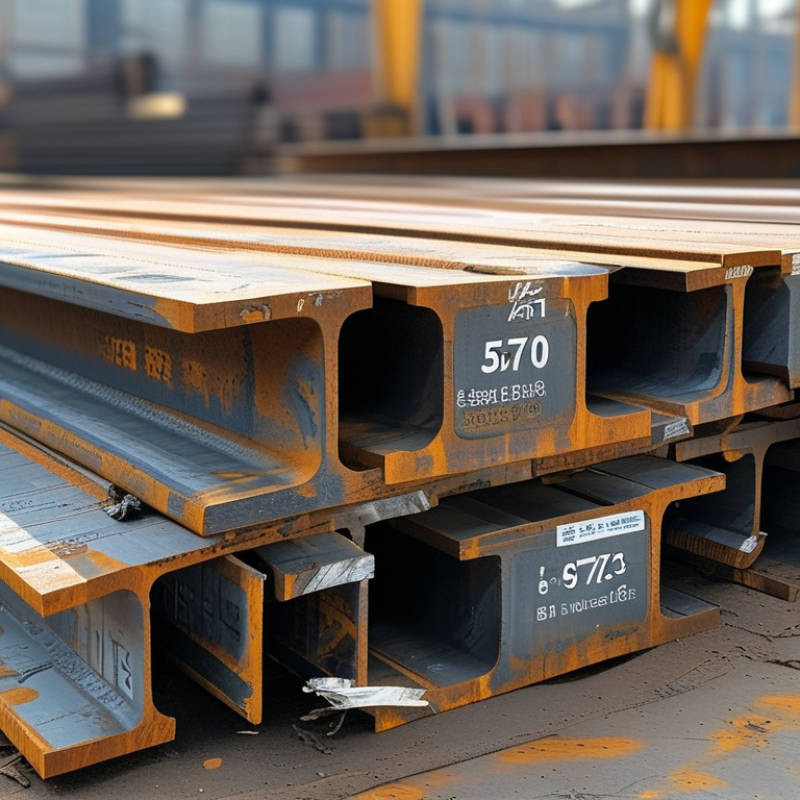
ASTM A572 Grade 50 is a high-strength, low-alloy structural steel specified under ASTM A572/A572M. Its minimum yield strength is 50 ksi, or about 345 MPa. Typical tensile strength reaches approximately 65 ksi, depending on thickness and specification requirements. The steel contains small alloy additions that improve strength without making fabrication unnecessarily difficult.
That balance makes Grade 50 suitable for I beams in buildings, platforms, bridges, and industrial frames. A stronger beam can carry higher loads or reduce its section size. This may lower structural weight and simplify transportation. Picture a warehouse frame with long roof spans and fewer supporting columns. Grade 50 I beams can help achieve that layout. They also offer useful weldability when qualified procedures and proper preheating are followed.
Still, Grade 50 is not automatically the best choice. A common mistake is selecting steel by strength alone. Engineers must check beam dimensions, span, buckling, fatigue, connections, and environmental exposure. Welding heat can also affect performance if controls are weak. The material certificate should confirm the grade, heat number, chemical limits, mechanical results, and inspection data. A dependable supplier should provide consistent dimensions, traceable test documents, and practical guidance for cutting and welding. Real projects sometimes reveal small issues, such as camber variation or surface scale, that drawings do not show. Careful inspection remains necessary.
ASTM A572 Grade 50 is a high-strength, low-alloy structural steel. Its minimum yield strength is commonly 50 ksi, with tensile strength starting near 65 ksi. These values support demanding building, bridge, platform, and industrial framing applications. The I-shaped profile places more steel away from the neutral axis, improving bending resistance without excessive weight. That geometry can reduce column loads and simplify lifting on busy construction sites.
Fabricators value Grade 50 for its practical weldability and consistent performance. Still, weld procedures must match the beam thickness, joint design, and project requirements. Cutting quality matters too. Rough edges can create stress points and complicate fit-up. Shop teams should verify beam dimensions, straightness, surface condition, and heat numbers before fabrication. Mill test certificates provide useful evidence, not a substitute for inspection.
The material does not automatically resist corrosion. Uncoated beams may need painting, galvanizing, or another approved protection system, especially in humid or coastal environments. Engineers should also check local buckling, lateral-torsional buckling, connection strength, and service deflection. A stronger grade cannot correct a weak design detail. In practice, the best specification balances strength, weight, availability, welding needs, and delivery control. That balance is sometimes underestimated.
Selecting the right ASTM A572 Grade 50 I beam supplier in China requires more than comparing prices. Start by checking production experience with structural steel projects. Ask for recent mill test certificates, heat numbers, chemical analysis, and mechanical results. Grade 50 typically requires a minimum 50 ksi yield strength and 65 ksi tensile strength.
Request dimensional records for flange width, web thickness, straightness, and length tolerance. These details matter when beams arrive at a fabrication yard. Confirm whether production follows ASTM A572/A572M and whether dimensions follow ASTM A6/A6M. Do not assume a Chinese or European equivalent has identical requirements. That shortcut creates problems.
A reliable supplier should explain steelmaking, ultrasonic testing, surface condition, and loading protection clearly. Review photos of bundled beams, painted markings, and covered storage areas. An independent pre-shipment inspection can verify quantity, dimensions, markings, and documents before payment. Ask how the supplier handles nonconforming material, replacement timing, and moisture damage during ocean transport.
Track records help.
Price deserves attention, but unusually low offers may hide thinner sections, incomplete testing, or unclear tolerances. I would compare three written quotations using the same beam size and delivery terms. In practice, buyers sometimes focus too heavily on certificates. A certificate can be genuine yet still fail to prove the exact bundle shipped. Match heat numbers with tags, packing lists, and inspection reports. That small check is easy to miss.
A reliable Chinese I-beam supplier should prove quality through records, not attractive photographs. ASTM A572/A572M Grade 50 requires a minimum yield strength of 50 ksi and tensile strength of 65 ksi. Chemical certificates should show carbon, manganese, phosphorus, sulfur, and silicon results. Heat numbers must remain traceable from billet to finished beam.
Dimensional control is equally important. ASTM A6/A6M defines tolerances for depth, flange width, thickness, straightness, and camber. Inspectors should measure each production lot with calibrated tools. A practical check includes ultrasonic examination when project specifications require internal defect screening. Tensile tests should follow ASTM procedures or ISO 6892-1. Test temperature and specimen location matter.
The World Steel Association reported about 1.019 billion tonnes of crude steel production in China during 2023. Scale helps capacity, but it does not guarantee consistency. A supplier audit should review mill certificates, calibration records, inspection plans, and corrective-action reports. Packaging also needs attention: dry separators, firm bundling, and readable heat marks reduce handling damage. Paperwork can still be incomplete. That weakness deserves a second verification before shipment. Experienced buyers should compare third-party test results with factory data and retain samples when the order is critical.
Ordering A572 Grade 50 I beams requires more than comparing prices. Confirm the required depth, flange width, thickness, length, and quantity before requesting quotations. A572 Grade 50 commonly provides a minimum yield strength of 50 ksi, but the project specification remains decisive. Ask for the applicable ASTM edition, chemical limits, production route, and mill test certificate. Small wording differences can affect acceptance.
Inspection should match the beam’s real service conditions. Check dimensions with calibrated tools, especially flange thickness and web straightness. Examine cut ends, surface marks, weld repairs, and visible corrosion. Heat numbers must match the certificates and beam markings. Independent inspection can verify tensile results, chemical analysis, ultrasonic testing, and dimensional tolerances. Do not rely only on photographs. They can hide distortions.
Delivery planning deserves equal attention. Confirm bundle weights, lifting points, loading sequence, protective wrapping, and transport documents. Long beams may need special trailers or route checks. Clarify whether coatings, cutting, drilling, and end preparation are completed before shipment. Leave time for reinspection at arrival. A rushed loading decision once caused avoidable handling damage in a similar project. That mistake was preventable. Clear drawings and signed inspection records reduce disputes, although no checklist replaces careful judgment.
Quality Commercial LED Lighting specializing in LED Tubes, LED Bulbs, LED Troffers, LED Door Kits, LED Retrofit Kits, LED Panels, LED Spot Lights, LED Wall Packs, LED Lamps, LED Drivers, LED Accessories, LED Lights, LED Sales, and LED Manufacturing. Headquartered in Atlanta, Georgia, USA.