
How to Choose LED Wall Packs in 2026?
Choosing Led Wall Packs in 2026 requires more than comparing wattage and price. Exterior lighting affects safety, energy bills, maintenance access, and neighborhood comfort. The U.S. Department of Energy states that LED lighting can use at least 75% less energy and last up to 25 times longer than incandescent lighting. However, that comparison does not automatically make every wall pack a smart purchase. A poorly shielded fixture can create glare, uneven illumination, or wasted uplight.
The better decision starts with measurable performance. Check delivered lumens, efficacy, color rendering, color temperature, surge protection, and rated lifetime. The DesignLights Consortium’s Solid-State Lighting Qualified Products List provides a useful reference for tested commercial products and control compatibility. ENERGY STAR guidance also emphasizes verified performance rather than marketing claims. Look for LM-79 photometric testing and LM-80 or TM-21 LED lifetime evidence when available. Those documents matter more than impressive packaging.
Mounting height changes everything. A 20-foot loading dock needs a different beam pattern than a six-foot apartment walkway. Field experience also shows that photocells, motion controls, and cut-off optics can reduce unnecessary nighttime operation. Still, controls are not magic. They may fail when poorly positioned or incorrectly commissioned. That deserves honest attention. This guide explains how to compare Led Wall Packs for 2026, balance initial cost against maintenance, and select lighting that performs reliably in real outdoor conditions. Because the cheapest fixture is rarely the cheapest decision.
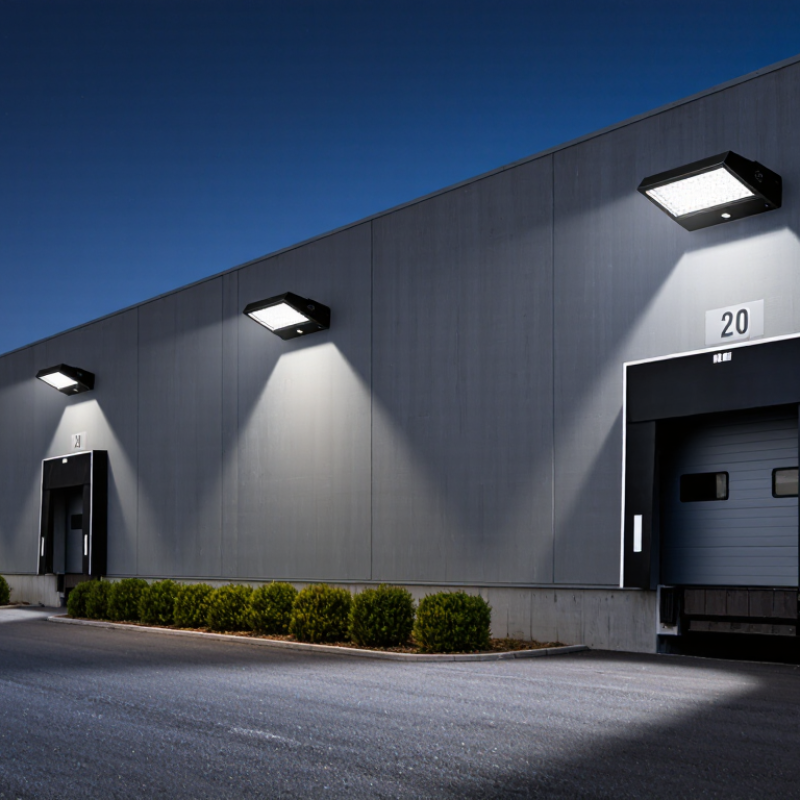
Define LED Wall Pack Types, Outputs, and 130–180 lm/W Efficacy
Choosing an LED wall pack starts with identifying its type. Full-cutoff models direct light downward and reduce glare near windows. Semi-cutoff designs spread light wider for loading areas and walkways. Adjustable wall packs help aim illumination around doors, corners, and service yards. Small compact units suit entrances, while larger units cover taller walls and wider zones.
Output should match the mounting height and target area, not simply the fixture’s wattage. A 30-watt wall pack may produce 4,500 lumens, while a 100-watt model may exceed 15,000 lumens. Review the photometric file and confirm illumination at ground level. For a ten-meter wall, spacing two fixtures may work better than installing one powerful unit. Too much output creates harsh contrast. That mistake is common.
Efficacy between 130 and 180 lumens per watt can reduce energy use, but the number needs careful reading. It may describe the LED package, not the complete fixture. Lens losses, thermal conditions, and driver performance lower real results. Look for tested luminaire efficacy, measured at a stated color temperature. A practical selection also checks IP rating, surge protection, operating temperature, and driver warranty. Choose 4000K for balanced outdoor visibility, unless local surroundings require warmer light. Controls can reduce overnight consumption. Still, sensors need correct aiming and commissioning. I have seen efficient fixtures perform poorly because dirt covered the lens or mounting angles were ignored. Specification sheets rarely show that inconvenience.
How to Choose LED Wall Packs in 2026? - Define LED Wall Pack Types, Outputs, and 130–180 lm/W Efficacy
| Wall Pack Type | Typical Application | Typical Input Power | Typical Delivered Output | Typical Efficacy | Recommended Distribution | Common CCT | Key Selection Notes |
|---|---|---|---|---|---|---|---|
| Full-Cutoff Wall Pack | Commercial façades, entrances, and sites requiring reduced uplight | 20–80 W | 2,600–13,600 lm | 130–170 lm/W | Type III or Type IV | 3000K, 4000K, 5000K | Choose when light trespass and skyglow control are important; verify the photometric file for actual uplight performance. |
| Semi-Cutoff Wall Pack | General perimeter lighting and older HID retrofit projects | 30–100 W | 3,900–16,000 lm | 130–160 lm/W | Type III or wide Type IV | 3000K, 4000K, 5000K | Provides broader wall and ground coverage but may create more uplight than a full-cutoff design. |
| Adjustable Wall Pack | Sites with changing mounting heights, setbacks, or aiming requirements | 25–100 W | 3,250–16,000 lm | 130–160 lm/W | Type II, Type III, or Type IV | 3000K, 4000K, 5000K | Confirm the adjustment range, locking mechanism, glare control, and final aiming procedure before installation. |
| Decorative Wall Pack | Hospitality, residential, retail, and architectural exteriors | 10–60 W | 1,300–9,600 lm | 130–160 lm/W | Forward throw, wall wash, or bidirectional | 2700K, 3000K, 4000K | Prioritize appearance, glare control, color consistency, and visual comfort over maximum lumen output. |
| Emergency-Ready Wall Pack | Exit routes, service areas, and facilities requiring backup operation | 20–80 W normal operation | 2,600–12,800 lm normal operation | 130–160 lm/W | Type II or Type III | 3000K, 4000K, 5000K | Check emergency duration, battery charging time, ambient-temperature limits, and applicable safety approvals. |
| Vandal-Resistant Wall Pack | Transit, correctional, industrial, and high-risk outdoor locations | 20–100 W | 2,600–16,000 lm | 130–160 lm/W | Type III or Type IV | 3000K, 4000K, 5000K | Look for impact-resistant lenses, tamper-resistant hardware, sealed construction, and a suitable ingress-protection rating. |
Key LED Wall Pack Specifications to Compare
| Specification | Practical Range or Target | Why It Matters |
|---|---|---|
| Delivered Lumens | Approximately 1,300–16,000 lm for common exterior wall-pack sizes | Use delivered lumens rather than LED-chip lumens to compare the light reaching the application. |
| System Efficacy | 130–180 lm/W, depending on optics, driver, CCT, and operating conditions | Higher efficacy can reduce energy use, but glare, distribution, thermal performance, and maintained output must also be evaluated. |
| Color Temperature | 2700K–3000K for warmer appearance; 4000K–5000K for neutral or cooler appearance | CCT affects visual appearance, perceived brightness, and the suitability of the fixture for residential or commercial surroundings. |
| Color Rendering | CRI 70+ for many outdoor security applications; CRI 80+ where color recognition is important | Higher CRI generally improves the appearance and recognition of colors, although it may affect efficacy. |
| Beam Distribution | Type II for narrow setbacks; Type III for typical wall and perimeter lighting; Type IV for broad forward coverage | The correct distribution improves uniformity and reduces wasted light outside the target area. |
| Ingress Protection | IP65 or higher for exposed outdoor installations | A suitable IP rating helps protect against dust and water; the rating should match the installation environment. |
| Operating Temperature | Select a fixture rated for the actual local ambient range | Temperature affects LED output, driver life, battery performance, and long-term reliability. |
| Controls and Dimming | Photocell, occupancy control, 0–10 V dimming, or networked controls where required | Controls can reduce operating hours and energy consumption, but compatibility and commissioning requirements should be confirmed. |
Note: Ranges are representative planning values for LED wall packs. Actual performance depends on the complete luminaire, optical system, driver, ambient temperature, installation height, and photometric testing conditions.
Related Posts
-
Top LED Wall Packs for Global Buyers How to Choose?
-
Efficient Lighting Solutions Transforming Spaces with Innovative Led Wall Packs
-
What Are the Advantages of Using Best LED Wall Packs for Energy Efficiency?
-
5 Best Benefits of Upgrading to LED Wall Packs for Your Business
-
Why Choose Industrial Led Lighting for Your Business Needs?
-
Why Choose Commercial Led Strip Lights for Your Business?