
How to Choose the Best Live Translation Earbuds?
Choosing Live Translation Earbuds is less about chasing the longest language list and more about finding a pair that works in real conversations. A quiet café is forgiving; a crowded station is not. Translation quality, response time, microphone performance, comfort, and battery life all shape what you hear—and how naturally you can reply. Small delays matter. So does a dropped connection.
The stakes are practical. CSA Research’s “Can’t Read, Won’t Buy” study found that 75% of surveyed consumers preferred product information in their own language. That report concerns online shopping, not earbuds, so it should not be treated as proof of translation-device performance. It does, however, show why clear language access matters. Andrew Ochoa, founder of translation-device company Waverly Labs, has focused his work on helping people communicate across language barriers; in paraphrase, the goal is technology that makes conversation easier, not more complicated. That distinction is worth remembering when comparing products. A device may advertise dozens of languages, yet still struggle with accents, overlapping voices, or weak Wi-Fi. Before buying, check which languages work offline, whether both speakers need an app, and how the earbuds handle noisy surroundings. Try a real exchange, if possible. Marketing claims can sound fluent; actual conversation is the test.
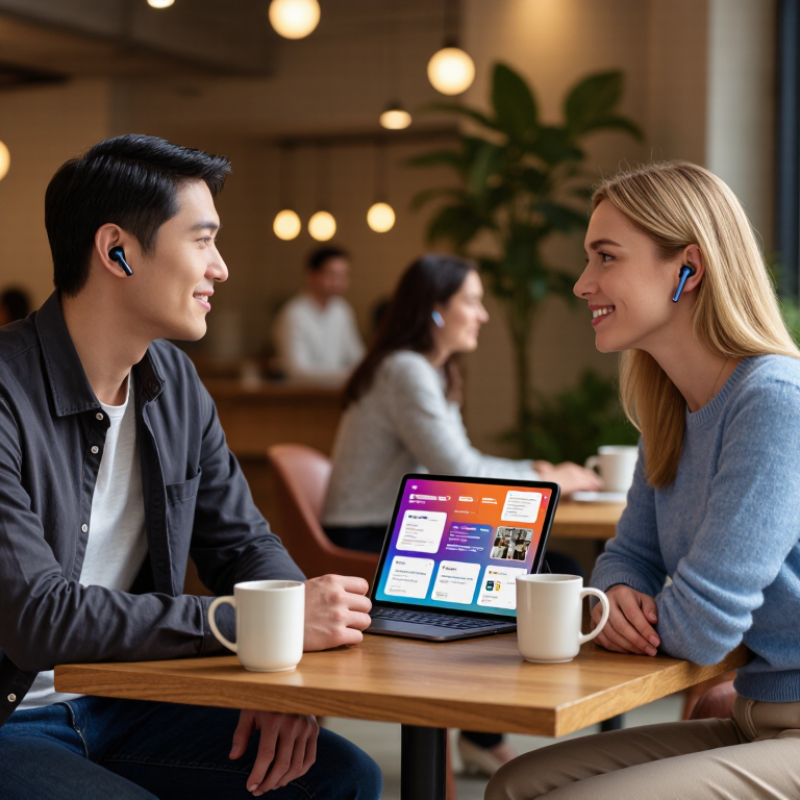
Define the Translation Chain: ASR, Machine Translation, and Speech Output
Live translation earbuds work through a chain, not a single magic feature. The microphone captures speech, and automatic speech recognition (ASR) turns sound into text. A crowded café can blur consonants; accents and fast speech add more errors. If the transcript is wrong, machine translation cannot reliably repair it. That distinction matters. Machine translation then uses context to convert recognized words into another language, but idioms and names can still come out oddly.
The final step is speech output: the earbuds or connected device reads the translated text aloud. Listen for clear pronunciation, natural pauses, and a delay that still allows conversation. A technically accurate translation may feel awkward if it arrives several seconds late. Test both directions with short, familiar phrases, then try a noisy setting. Check whether the device shows text, so you can catch a mistranscribed number or place name. No chain is flawless, and a quiet test room can give an overly rosy impression.
Tips: Speak in short phrases and pause between thoughts. Compare the spoken output with on-screen text when available. Notice where errors happen; one missed word can change the meaning.
How to Choose the Best Live Translation Earbuds? — Define the Translation Chain: ASR, Machine Translation, and Speech Output
| Translation Stage | What It Does | Input and Output | What to Evaluate | Common Limitations | Questions to Ask When Choosing Earbuds |
|---|---|---|---|---|---|
| Audio Capture | Microphones capture the speaker’s voice and may use noise reduction or beamforming to emphasize speech. | Input: Speech mixed with surrounding sounds. Output: Audio prepared for recognition. | Speech pickup in quiet and noisy environments; handling of wind, distance, and overlapping voices. | Background noise, microphone placement, and multiple speakers can make speech harder to recognize. | Can the earbuds capture a nearby conversation clearly in the places where they will be used? |
| Automatic Speech Recognition (ASR) | Converts spoken audio into written words in the detected or selected source language. | Input: Captured speech. Output: A source-language transcript. | Recognition of accents, names, numbers, conversational speech, and relevant vocabulary; time to produce a transcript. | Unusual names, strong accents, code-switching, low-volume speech, and noisy audio may cause transcription errors. | Does the supported language list include the specific spoken language and regional varieties you need? |
| Machine Translation (MT) | Transfers the recognized text from the source language into the selected target language. | Input: Source-language text. Output: Target-language text. | Meaning, terminology, grammar, preservation of names and numbers, and performance on informal conversation. | Idioms, ambiguous phrases, specialized terms, and errors in the ASR transcript can affect the translation. | Are both the source and target languages supported, and can you review the translated text? |
| Speech Output (Text-to-Speech) | Reads the translated text aloud using synthesized speech, when spoken output is available. | Input: Target-language text. Output: Synthesized speech played through an earbud or another device. | Pronunciation, intelligibility, voice choice, playback controls, and how quickly audio starts. | Speech may sound less natural than a human speaker, and playback can be difficult to follow in loud surroundings. | Can you adjust volume and playback, and is spoken output available for your chosen language pair? |
| End-to-End Conversation Flow | Coordinates audio capture, recognition, translation, and output so participants can take turns communicating. | Input: Conversation in one or more languages. Output: Text, translated audio, or both. | Time from speech to translated result; turn-taking clarity; connection reliability; and ease of switching languages. | Delays can interrupt natural conversation. Results may also depend on a phone, an internet connection, or supported offline features. | Does the product explain which features work offline, what requires a connection, and how conversation mode handles turns? |
| Practical Quality Check | Tests the complete translation chain with real conversations rather than relying only on a feature list. | Test: Short exchanges in the intended language pair. Review: Transcript, translated meaning, spoken output, and delay. | Whether key details remain accurate across the full chain, especially names, times, prices, directions, and requests. | A strong result in one language pair or quiet setting does not guarantee the same result in another pair or environment. | Try the exact language pair and typical setting you expect to use, and verify important information with the other speaker. |