
A Microbiology Cabinet is more than a metal enclosure with a humming fan. It is a controlled workspace designed to protect personnel, samples, and the surrounding laboratory from biological aerosols. The right choice depends on the organisms handled, the procedures performed, and the level of protection required.
Dr. Jonathan Y. Richmond, a former CDC laboratory-safety authority, emphasized, “The biological safety cabinet is the primary device used to protect laboratory workers from infectious aerosols.” That principle still matters. A Class I cabinet protects the operator and environment, but it does not protect the sample. A Class II cabinet provides personnel, environmental, and product protection, making it the common choice for routine microbiology, cell culture, and diagnostic work. A Class III cabinet offers the highest containment through a sealed, glove-operated design.
The details are tangible. Watch the airflow alarm. Check the front grille. Notice whether the sash is at the marked height. A quiet fan does not prove safe performance. Certification, filter integrity testing, correct installation, and disciplined work habits remain essential.
Choosing the best Microbiology Cabinet is not simply a purchasing decision. It is a risk assessment. Sometimes, the most expensive model is unnecessary. Sometimes, the cheaper option creates hidden weaknesses. I have seen specifications look impressive while maintenance access was poor. That is an uncomfortable lesson. Cabinet selection should involve a qualified biosafety professional, equipment certification records, and the laboratory’s actual workflow. The best cabinet is the one that fits the hazard, protects the work, and remains properly maintained over time.
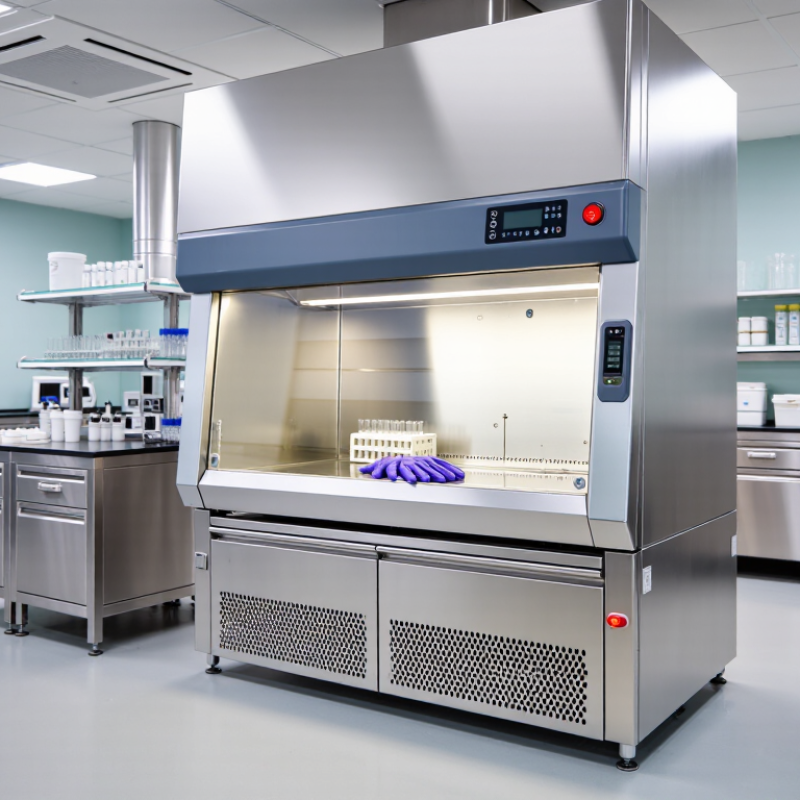
A microbiology cabinet is an enclosed, ventilated workspace for handling microorganisms and laboratory materials. It reduces the movement of aerosols, droplets, and contaminated particles during routine procedures. Most cabinets use high-efficiency particulate air filters, controlled airflow, or both. Airflow matters. The design determines whether protection reaches the worker, the sample, the room, or all three.
A Class I cabinet mainly protects personnel and the surrounding room. It does not provide strong protection for open samples. A Class II cabinet is more versatile because it directs filtered air around the work area. It is commonly selected for cell culture, diagnostic preparation, and general microbiology tasks. A Class III cabinet is fully enclosed and uses sealed gloves for higher-risk work. It offers stronger containment but requires more complex procedures and maintenance.
The best cabinet depends on the biological risk, workflow, room layout, and required protection. A cabinet that feels powerful may still be unsuitable if its airflow is poorly matched to the procedure. Operators should verify certification, filter condition, alarm function, and airflow performance before use. Keep the work surface uncluttered; even a small box can disrupt the protective air curtain. Labels can mislead. A clean bench may protect the sample but direct air toward the user, so it is not a substitute for a biosafety cabinet. In practice, staff training often matters as much as cabinet specifications. I have found that rushed loading and blocked grilles create avoidable problems, even in well-maintained equipment.
A microbiology cabinet is an enclosed workspace designed to control airborne contamination during laboratory procedures. In practice, the cabinet works through carefully directed airflow rather than simple physical enclosure. A Class II cabinet is commonly selected for routine microbiology because it protects the operator, the material, and the surrounding room.
Room air enters through the front opening. A fan moves this air through a high-efficiency particulate air filter. Filtered air then flows downward across the work area in a steady vertical curtain. Some air returns through the front and rear grilles, while the remaining air passes through another filter before discharge. This circulation helps capture droplets and particles created during pipetting or culture handling. It does not destroy every biological hazard. That distinction matters.
Good performance depends on daily behavior. Keep bottles and racks away from the grilles. Work from clean materials toward used materials. Move your hands slowly, because fast movements can disturb the air barrier. The cabinet should run for the period required by its operating procedure before work begins. Surface disinfection must use a method compatible with the organism and the cabinet materials. Do not use an open flame inside; it can disrupt airflow and damage filters. A Class I cabinet may suit basic personnel protection, while a Class III cabinet offers a sealed system for higher containment needs. The “best” type depends on the hazard assessment, not cabinet size. Mistakes still happen, especially when crowded equipment blocks the airflow. Regular certification and documented checks remain essential.
How Does a Microbiology Cabinet Work?
A microbiology cabinet, commonly called a biological safety cabinet (BSC), protects laboratory personnel, the surrounding environment, and sometimes the work product by controlling airflow and using high-efficiency particulate air (HEPA) filtration. Class I cabinets protect personnel and the environment, Class II cabinets provide personnel, environmental, and product protection, and Class III cabinets provide the highest containment through a gas-tight enclosure and glove ports. For routine microbiological work, a certified Class II cabinet is often the most versatile choice.
Microbiology cabinets control airborne hazards during laboratory work. Their design affects personnel, samples, and room safety.
Class I cabinets protect the operator and surrounding environment. They use inward airflow and filtered exhaust, but they do not protect the sample. This makes them suitable for procedures where product sterility is not essential.
Class II cabinets are widely used for culture handling and routine microbiology. They protect the worker, the environment, and the material inside. Vertical, filtered airflow passes over the work area.
Class II A1 and A2 models commonly recirculate filtered air, while B1 and B2 models use dedicated exhaust systems. The correct choice depends on chemicals, biological risks, heat sources, and facility design. A mismatch can create hidden exposure risks.
Class III cabinets provide the highest containment level. They are sealed units with attached gloves, making direct contact impossible. They suit highly hazardous procedures, but they demand complex installation and maintenance.
Clean benches are different. They protect the sample only, not the user, and should not handle infectious materials. The choice is rarely obvious.
A documented risk assessment should guide it, followed by professional certification, airflow testing, and regular filter checks. In practice, teams sometimes select cabinets by size or price alone. That shortcut deserves review, especially when procedures change or staff handle unfamiliar organisms.
A microbiology cabinet is an enclosed workstation designed to control biological hazards, protect samples, or both. Its safety depends on airflow, filtration, cabinet construction, and correct operating procedures. The label alone is not enough. Risk assessment must guide the choice.
A Class I biological safety cabinet protects staff and the surrounding room, but it does not protect the open sample from contaminated air. A Class II cabinet uses inward airflow and HEPA filtration to protect personnel, the environment, and many microbiological materials. It suits routine culture work when installed and certified correctly. A Class III cabinet provides the strongest containment through a sealed enclosure and glove ports. It is useful for higher-risk procedures, though it is slower and more demanding to operate.
A clean bench is different. It protects the product, not the worker, so it should not replace a biological safety cabinet for hazardous organisms. In daily use, keep the front and rear grilles clear. Move materials slowly. Disinfect surfaces before and after work. Never assume a running fan makes an unsafe process safe. Certification, filter checks, airflow testing, and staff training matter as much as cabinet type. The labels sound tidy, but real workflows are messier. I have seen users choose equipment by size alone. That shortcut can create blind spots, especially when procedures change or several people share one cabinet. Local biosafety requirements should be checked before installation and use.
| Cabinet type | Primary protection | Airflow and filtration | Typical microbiology uses | Chemical and radiological suitability | Main limitations | Best choice when... |
|---|---|---|---|---|---|---|
| Class I | Protects personnel and the laboratory environment. It does not provide product protection. | Room air enters through the front opening and passes through a HEPA-filtered exhaust system. The work zone is not supplied with sterile, filtered air. | Work involving materials where sample sterility is not essential, such as certain containment or aerosol-generating procedures. | May be suitable for limited amounts of volatile chemicals or radionuclides when correctly exhausted and approved by the facility safety program. | Samples can be contaminated by incoming room air; unsuitable for aseptic tissue culture or sterile product preparation. | Personnel and environmental protection are required, but protection of the experiment is not a priority. |
| Class II, Type A1 | Protects personnel, the environment, and the work product when operated correctly. | Front inflow combines with vertical, HEPA-filtered downflow. A portion of air is recirculated within the cabinet and the remainder is exhausted through a HEPA filter. Typical minimum inflow is about 75 ft/min (0.38 m/s), subject to the applicable certification standard. | Routine work with low- to moderate-risk biological materials, microbiological cultures, and aseptic procedures that do not generate hazardous chemical vapors. | Not appropriate for volatile toxic chemicals or radionuclides because recirculation can allow vapors to remain in the cabinet or return to the room. | Air recirculation limits chemical use; connection to building exhaust requires careful engineering and must follow the cabinet certification requirements. | General microbiology and cell-culture work need product, personnel, and environmental protection without hazardous volatile chemicals. |
| Class II, Type A2 | Protects personnel, the environment, and the work product. | Uses HEPA-filtered vertical downflow and front inflow. Most air is recirculated inside the cabinet, with a HEPA-filtered portion exhausted. Typical minimum inflow is about 100 ft/min (0.51 m/s), subject to the applicable certification standard. | The broadest range of routine microbiology applications, including bacterial and fungal cultures, cell culture, diagnostic procedures, and many aerosol-generating activities. | Small quantities of non-volatile or low-volatility chemicals may be used if permitted by the risk assessment. Volatile toxic chemicals and radionuclides generally require a properly exhausted configuration or another cabinet type. | Not a chemical fume hood; incorrect use of volatile chemicals can expose users or contaminate the cabinet and exhaust system. | A versatile, commonly selected cabinet is needed for standard microbiology and aseptic work with biological hazards. |
| Class II, Type B1 | Protects personnel, the environment, and the work product when connected to a suitable dedicated exhaust system. | Provides HEPA-filtered downflow and front inflow, with a defined portion of cabinet air directed into a hard-ducted exhaust system. The exact airflow pattern and exhaust proportion must meet the relevant certification requirements. | Specialized microbiology involving some volatile toxic chemicals or trace radionuclides in designated work areas, together with biological materials. | Can accommodate limited chemical or radiological work only under a documented risk assessment, proper exhaust design, and operational controls. | More complex installation and operation; the work zone must be arranged carefully so chemical procedures remain in the exhausted portion. | Biological work occasionally involves controlled quantities of volatile chemicals and a facility can provide dedicated exhaust. |
| Class II, Type B2 | Protects personnel, the environment, and the work product, with no air recirculated back into the laboratory. | A total-exhaust cabinet: all cabinet air is discharged through a dedicated, hard-ducted exhaust system after passing through the appropriate filtration and exhaust components. | Biological procedures that also require significant use of volatile toxic chemicals or radionuclides, when the facility is specifically designed for this purpose. | The most suitable Class II option for combined biological and volatile chemical or radiological work, subject to institutional approval and engineering controls. | High installation, energy, maintenance, and operational demands; loss of exhaust airflow requires immediate work stoppage and a defined emergency response. | A validated total-exhaust system is available and routine work genuinely requires both biological containment and volatile hazardous chemicals. |
| Class III | Provides the highest level of personnel, environmental, and product protection through a gas-tight enclosure. | The work area is completely enclosed. Manipulations are performed through attached, leak-tight gloves; air enters through HEPA filtration and is exhausted through HEPA filtration, often with additional treatment depending on the hazard. | High-containment microbiology involving agents or procedures for which maximum physical containment is required. | Can be configured for certain hazardous chemicals or radionuclides, but compatibility, waste handling, exhaust design, and facility controls must be assessed in advance. | Restricted access, reduced dexterity, slower workflow, higher cost, and complex decontamination and maintenance procedures. | The risk assessment requires a sealed, glove-operated enclosure and the laboratory can support specialized high-containment infrastructure. |
Choosing the best microbiology cabinet starts with your procedures, not the cabinet’s label. A Class I cabinet protects personnel and the room, but it does not protect exposed samples. Class II cabinets add product protection through filtered, inward airflow. For routine culture work, this difference matters.
The WHO Laboratory Biosafety Manual, 4th edition, places risk assessment at the center of cabinet selection. It considers organisms, aerosols, volumes, and work practices. The CDC/NIH BMBL, 6th edition, also recommends a biological safety cabinet for procedures that may generate infectious aerosols. These reports support a practical choice: use Class II protection when samples, staff, and room safety all matter.
Short answer: usually Class II.
Not every Class II model fits every laboratory. NSF/ANSI 49 distinguishes types such as A2, B1, and B2, with different airflow and exhaust requirements. An A2 cabinet often suits general microbiology when volatile chemicals are not part of the process. A B2 model requires dedicated exhaust and stronger facility coordination. It can be excessive for simple culture work.
Watch the details. A noisy cabinet may discourage correct use. Poor sash height can disrupt airflow. Annual certification is expected, yet daily operator technique still decides performance. A certified cabinet can fail in practice. That uncomfortable point deserves attention. Ask an independent biosafety professional to review the risk assessment, room utilities, cleaning method, and future workload before purchase.
Quality Commercial LED Lighting specializing in LED Tubes, LED Bulbs, LED Troffers, LED Door Kits, LED Retrofit Kits, LED Panels, LED Spot Lights, LED Wall Packs, LED Lamps, LED Drivers, LED Accessories, LED Lights, LED Sales, and LED Manufacturing. Headquartered in Atlanta, Georgia, USA.