10 Commercial LED Lighting Tips for Global Buyers

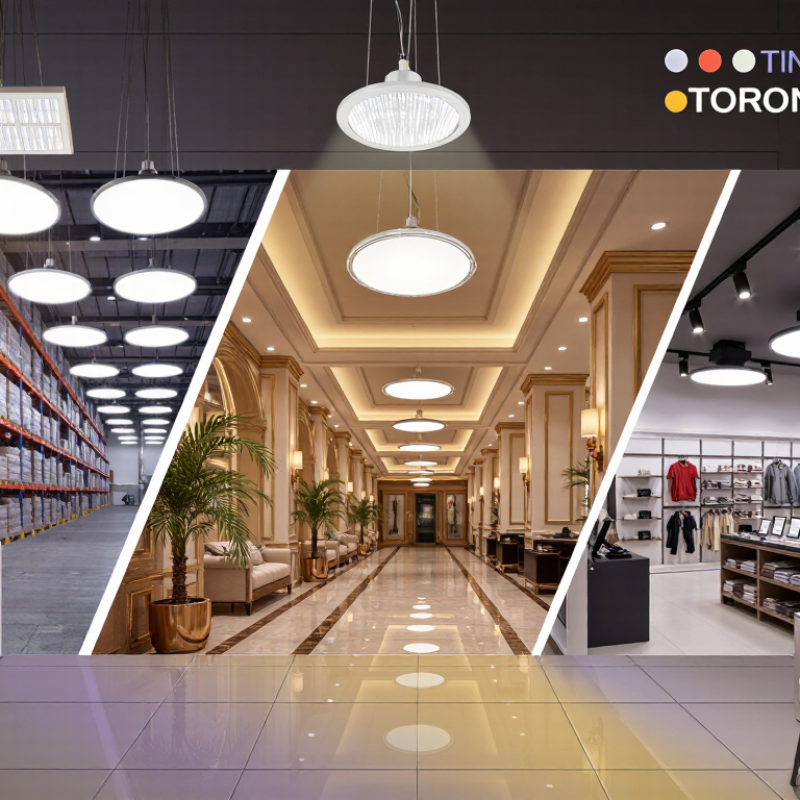
Buying Commercial Led Lighting across borders is not simply a matter of comparing wattage and price. A warehouse in Rotterdam, a hotel in Dubai, and a retail store in Toronto may need completely different light levels, beam angles, color temperatures, and control systems. Local climate matters too. Heat, humidity, dust, and unstable maintenance access can shorten a fixture’s useful life.

James Benya, a respected lighting engineer and designer, has said, “The best lighting is the lighting you don’t notice.” This principle remains valuable for global buyers. Good lighting supports safe movement, accurate product presentation, comfortable work, and lower energy use without becoming visually distracting. It should also come with credible photometric data, tested driver performance, suitable ingress protection, and a clear warranty.

This guide presents ten practical Commercial Led Lighting tips for international purchasing teams. It examines product quality, certifications, color consistency, controls, installation conditions, lifecycle cost, and supplier support. A low purchase price can still become expensive after repeated driver failures or difficult replacements. That risk is easy to underestimate.

No checklist is perfect. Buyer requirements change. Specifications can also look impressive on paper while performing poorly on site. Careful sampling, independent testing, and a small pilot installation can reveal problems before a full shipment. The goal is not to choose the brightest fixture. It is to choose dependable light that fits the building, the people, and the long-term operating plan.
10 Commercial LED Lighting Tips for Global Buyers

Define Commercial Lighting Needs and Project Requirements

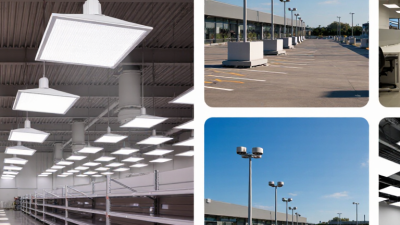
Commercial lighting projects succeed when requirements are defined before products are compared. Start with each room’s function, dimensions, ceiling height, and working surfaces. A warehouse aisle needs uniform visibility, while a retail display may need stronger accent lighting. Record operating hours, mounting positions, temperature, dust, and moisture exposure. These details affect performance and maintenance planning.

Tip: Create a room-by-room schedule.

During site assessments, measure existing light levels and identify glare, shadows, and dark corners. Specify target illuminance, color temperature, color rendering, beam angle, and control methods. Check voltage compatibility and emergency lighting requirements for the project location. Do not rely only on catalog figures. Real ceilings, reflective floors, and aging equipment can change the result.

Small details matter.

A practical specification should include expected lifetime, driver access, cleaning needs, warranty terms, and replacement procedures. Ask suppliers for test reports and clear performance data. I have seen projects fail because energy savings were estimated without considering controls or operating patterns. A spreadsheet can still miss user comfort. Review the plan with installers and daily occupants before approval. Their feedback may reveal glare near screens, inconvenient switches, or unsafe maintenance access. It may also challenge the original design, which is useful.

Compare LED Performance Metrics, Beam Angles, and Color Options

For global commercial buyers, LED performance starts with measurable data, not a bright sample in a showroom. Compare efficacy in lumens per watt at the fixture level, not only the LED chip level. Check lumen maintenance, power factor, total harmonic distortion, and flicker results. A fitting that saves energy but causes visible flicker may create discomfort in offices and retail spaces. Request independent test reports and current photometric files before approving large orders.

Beam angle changes how a space feels and performs. Narrow beams can highlight merchandise, artwork, or tall shelves, while wide beams reduce dark gaps across open floors. Review the candela distribution and mounting height together. A 24-degree beam may look precise at four meters but produce harsh patches at a lower ceiling. I once selected a narrow beam too quickly, and the installation needed extra fittings. That mistake changed my review process.

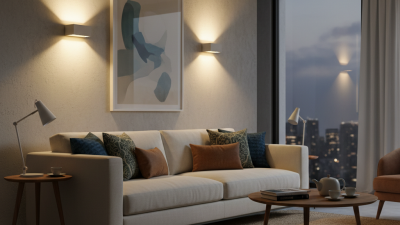
Color options require equal care. Warm white around 2700–3000K can support hospitality settings, while 3500–4000K often suits offices and general retail. Verify CRI, especially R9, when fabrics, food, or skin tones matter. TM-30 data can reveal color fidelity that CRI alone misses. Ask for consistent chromaticity tolerances, such as a defined color bin. Specifications can still fail in practice. Sample fixtures under the actual ceiling, wall, and floor colors before confirming the final quantity.

10 Commercial LED Lighting Tips for Global Buyers - Compare LED Performance Metrics, Beam Angles, and Color Options
No. Buying Tip Key Dimension Typical Reference or Practical Target Why It Matters Buyer Verification
1 Compare delivered efficacy, not LED-chip efficacy System efficacy Approximately 100–180 lm/W for many current commercial luminaires; confirm the complete luminaire value. Optical losses, drivers, thermal conditions, and housing design can reduce the light output delivered by the finished product. Request an LM-79-style photometric report showing lumens, watts, efficacy, ambient temperature, and test configuration.
2 Match beam angle to the space and mounting height Beam angle Narrow: <25°; medium: 25–40°; wide: 40–60°; very wide: >60°. These are practical categories, not universal regulatory classes. Narrow optics provide stronger intensity for high ceilings or accenting, while wider optics improve coverage at lower mounting heights. Review the polar candela distribution, beam angle definition, spacing criteria, and glare results rather than relying on a product label alone.
3 Select color temperature for the application Correlated color temperature (CCT) 2700–3000 K: warm; 3500–4100 K: neutral; 5000–6500 K: cool daylight appearance. CCT affects visual atmosphere, merchandise appearance, perceived brightness, and consistency with existing lighting. Specify the allowed CCT tolerance, such as a defined ANSI chromaticity bin, and request samples before a large order.
4 Use CRI and special color metrics together Color rendering CRI (Ra) ≥80 is common for general commercial areas; ≥90 is often preferred for retail, hospitality, art, and healthcare applications. R9 should be checked when saturated red rendering matters. A single CRI value does not fully describe how skin tones, food, fabrics, or red objects will appear. Ask for the complete color report, including Ra, R9, chromaticity coordinates, and any TM-30 results required by the project.
5 Evaluate lifetime using L70 and operating conditions Rated life and lumen maintenance Commercial products commonly state 50,000–100,000 hours to L70, meaning estimated output remains at 70% of initial lumens under specified conditions. L70 describes light depreciation, not guaranteed failure-free operation. Heat, ambient temperature, driver stress, and switching cycles influence service life. Check the test standard, temperature assumptions, TM-21 projection, driver life, warranty terms, and expected annual operating hours.
6 Control glare through optical design Unified Glare Rating (UGR) UGR <19 is a common design target for many office workspaces; the appropriate limit depends on the room and visual task. Lower glare can improve visual comfort, especially around computer screens and reflective surfaces. Require UGR data for the actual room geometry, luminaire spacing, reflectances, mounting height, and viewing direction.
7 Check flicker and stroboscopic effects Temporal light modulation For initial screening, request measured PstLM ≤1.0 and SVM ≤0.9 at the intended operating condition; project requirements may be stricter. Flicker performance can change with dimming level, driver design, mains frequency, and control method. Obtain a temporal-light-modulation report covering full output, minimum dimming level, and the intended control system.
8 Verify electrical efficiency and power quality Power factor and total harmonic distortion PF ≥0.90 is a practical commercial target; lower THD is preferable where many luminaires share a circuit or where local requirements apply. Power factor affects apparent power and electrical infrastructure loading; harmonic current can affect system performance. Request input voltage range, input current, PF, THD, inrush current, standby power, and performance at different dimming levels.
9 Match ingress protection to the environment IP rating IP20 provides no water protection; IP44 protects against splashing water; IP65 is dust-tight and protected against water jets; IP66 adds protection against powerful water jets. The correct rating helps protect against dust, moisture, washdown, and outdoor exposure. IP ratings do not automatically indicate impact or corrosion resistance. Confirm the rating for the complete installed luminaire and separately assess IK impact rating, corrosion protection, and ambient-temperature limits.
10 Confirm dimming and control interoperability Control protocol and dimming range Common options include phase-cut, 0–10 V, DALI-2, and networked controls. A practical specification should state the minimum stable dimming level, such as 10% or lower, where required. Incompatible drivers and controls can cause flicker, audible noise, uneven dimming, control dropouts, or excess standby consumption. Test the exact luminaire, driver, controller, emergency system, and local mains conditions together before approving production.
Note: The figures above are practical comparison ranges and screening targets for commercial projects. Final requirements should be based on the applicable local electrical, photometric, safety, energy-efficiency, and building regulations.

Verify Global Safety Standards, Certifications, and Regional Compliance

Global commercial LED lighting purchases require more than lumen ratings and attractive prices. Safety documentation must match the destination market, product type, and installation environment. Ask for current test reports covering electrical safety, electromagnetic compatibility, photobiological risks, and material restrictions. Standards such as IEC 60598 and IEC 62471 may apply, but local requirements can differ.

Tip 1: Check every certificate against the exact model number, driver, voltage, and housing. A report for a similar fixture is not enough. Confirm the testing laboratory’s accreditation and the certificate’s validity. Look for traceable serial numbers, test dates, and declared operating conditions. Small details matter.

Regional marks also need careful review. European projects may require CE-related documentation, while other markets may request different national approvals. Confirm whether the product needs registration, energy labeling, import documents, or local language warnings. Do not rely on a supplier’s logo alone. Request the declaration of conformity and the technical file summary when permitted.

Tip 2: Build a compliance checklist before ordering samples. Include voltage fluctuations, humidity, dust, emergency operation, and mounting conditions. A warehouse test cannot fully represent a coastal site or a hot factory ceiling. I have seen buyers focus on certificates and overlook installation instructions. That mistake can create unsafe operation. Recheck the documents after any change to LEDs, drivers, optics, or enclosure materials. Compliance is not a one-time box to tick.

Evaluate Energy Efficiency, Lifespan, Controls, and Maintenance Needs

10 Commercial LED Lighting Tips for Global Buyers

Energy efficiency starts with the complete fixture, not the LED chip alone. Check delivered lumens, watts, efficacy, power factor, and standby consumption. Measure the whole system. Not just the lamp. Request independent photometric data and test conditions before comparing prices. A highly efficient fixture may perform poorly if glare causes workers to add unnecessary lighting. I once saw a warehouse specification miss this issue. The energy model looked excellent, but uncomfortable brightness reduced real-world acceptance.

Lifespan claims need careful reading. L70 describes when output may fall to 70 percent of its initial level. It does not guarantee failure-free operation. Review the driver rating, ambient temperature, thermal design, and warranty terms. Confirm whether the stated life applies at your installation temperature. Humid sites, dusty ceilings, and frequent switching can change results. Small details matter.

Controls can create savings, but only when staff can use them. Check compatibility with occupancy sensors, daylight dimming, emergency systems, and local control protocols. Ask who will commission the settings. Maintenance deserves equal attention. Choose accessible drivers, replaceable components, clear fault indicators, and readily available spare units. Inspect sealing ratings for outdoor or washdown areas. Plan cleaning intervals around dust levels, not calendar habits. Keep records. A perfect forecast is impossible, and ignoring that uncertainty can make a cheap installation expensive.

Assess Suppliers, Total Costs, Warranties, and International Logistics

Global LED purchasing is not a lamp comparison. It is a supplier, cost, warranty, and logistics audit. The IEA’s Energy Efficiency 2023 report estimates that lighting uses about 15% of global electricity. Small efficiency gaps matter across warehouses, roads, and offices. Ask suppliers for LM-80 data, TM-21 projections, photometric files, and production samples. Check test conditions, not only marketing claims. A 150 lm/W sample may perform differently at 40°C.

Build total cost from the purchase price, drivers, controls, installation, energy, maintenance, freight, duty, and disposal. Compare five-year costs using local tariffs and operating hours. Use measured wattage, not nominal ratings. Warranty terms should define lumen maintenance, driver failure, labor coverage, exclusions, and claim response times. One uncomfortable lesson: a long warranty is weak when replacement parts are unavailable. Require spare drivers and documented repair procedures.

UNCTAD’s Review of Maritime Transport 2024 states that maritime shipping carries over 80% of world merchandise trade by volume. Therefore, confirm carton dimensions, pallet layouts, HS classification, insurance, and the chosen Incoterm before ordering. Freight quotes are not landed costs. Voltage, frequency, plug standards, and emergency-lighting requirements also vary by market. A pilot shipment can expose packaging damage and customs delays. It costs more initially, but skipping it may cost far more. Even careful buyers sometimes overlook port congestion and seasonal surcharges.

10 Commercial LED Lighting Tips for Global Buyers

Five-year cost model for comparing supplier pricing, international logistics, warranty coverage, installation, and energy use.

Planning assumptions: 100 fixtures, 40 W per fixture, 4,000 operating hours per year, five-year evaluation period, electricity at US$0.12 per kWh, US$2,500 installation, and US$500 maintenance allowance. Freight and purchase values are scenario inputs rather than company or brand data. The model shows why buyers should compare total landed cost instead of unit price alone.